
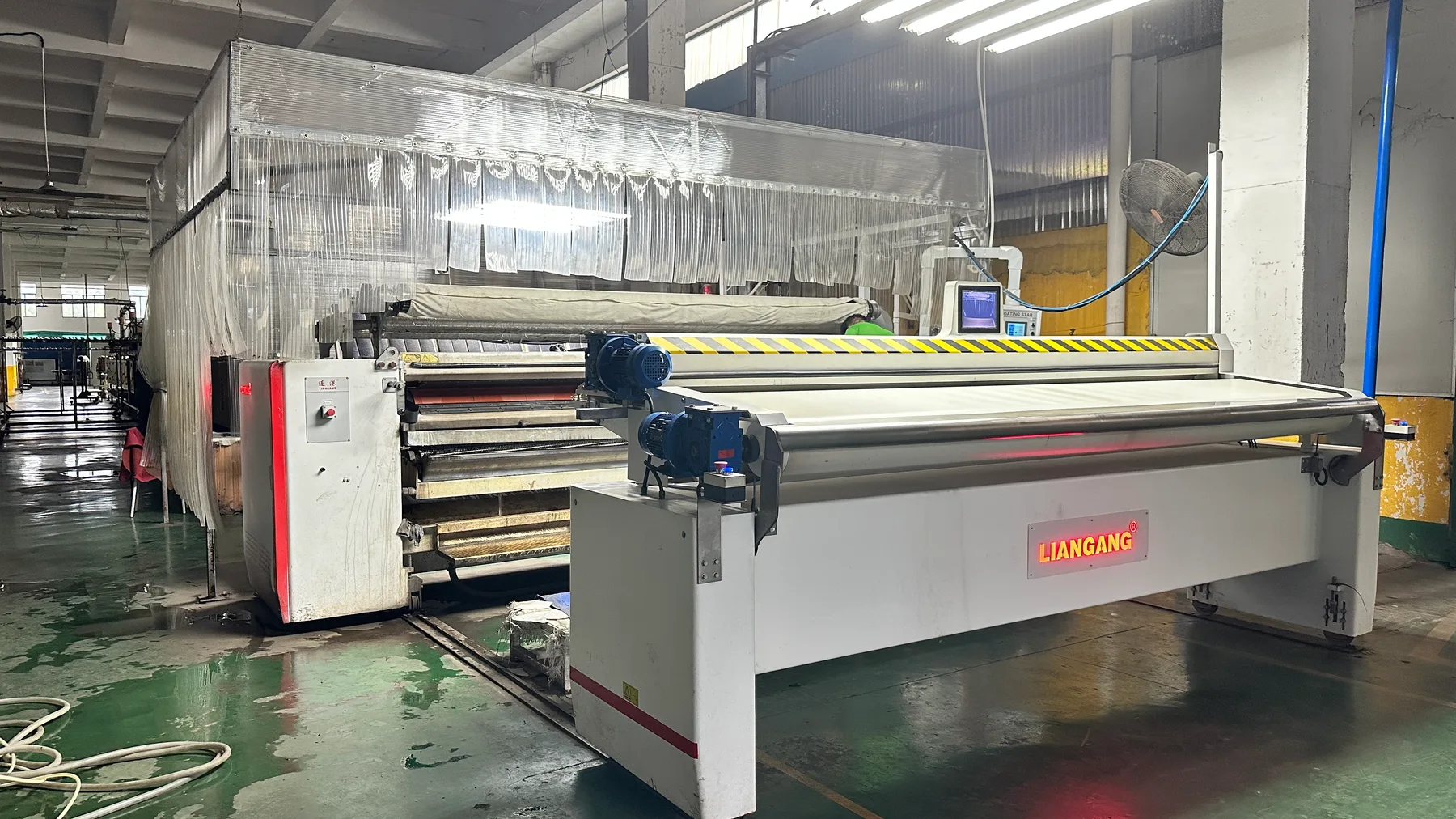
Direct answer: color variation in natural leather is normal, but it should be managed. A reliable control system starts before finishing: wet-blue grading, controlled dyeing conditions, drying discipline, finishing control, agreed lighting, master samples and batch inspection all work together.
01 · Causes
Where does leather color variation come from?
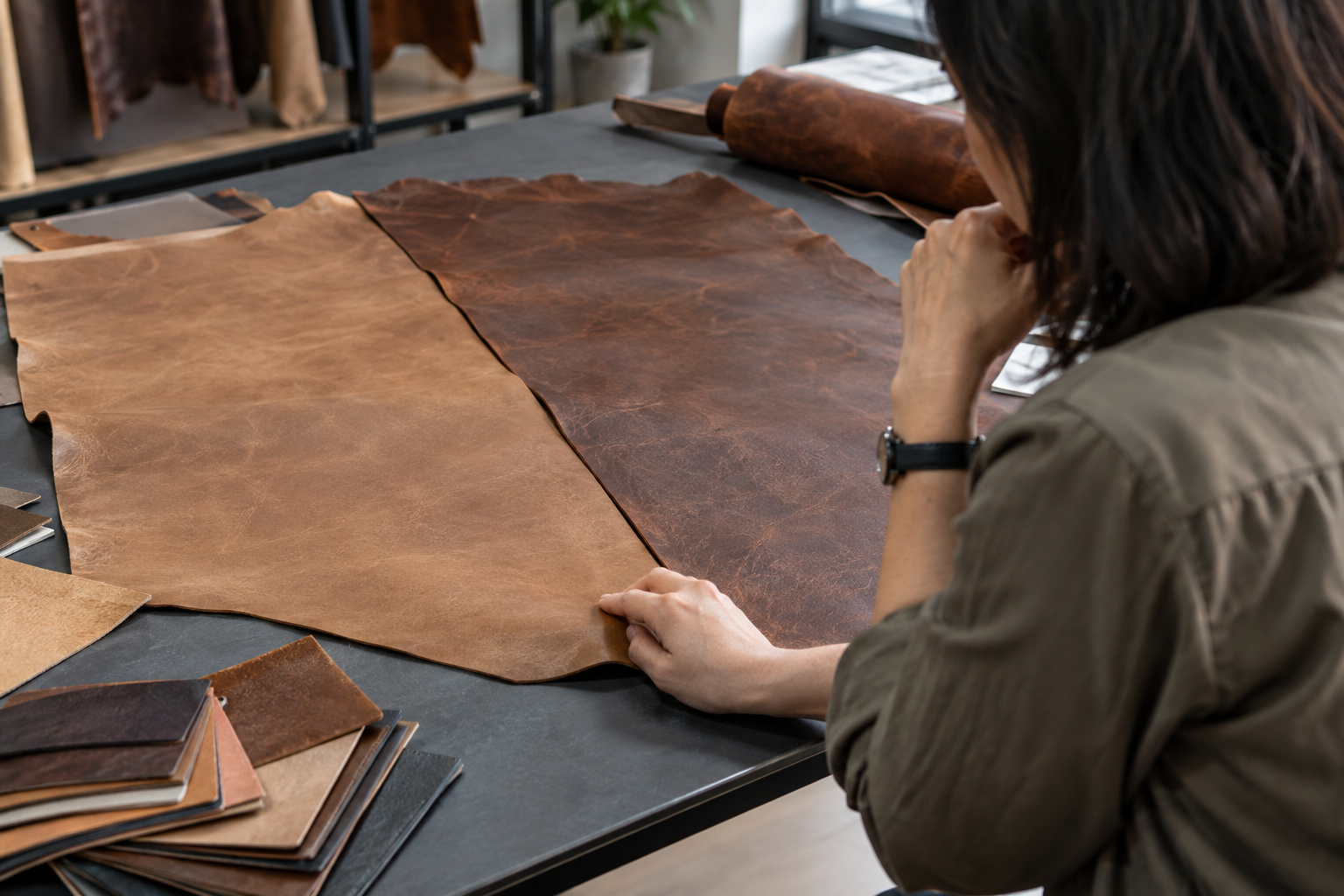
Color variation is not caused by one production step. It develops through the interaction of the raw material, wet-blue condition, dyeing process, drying method, surface finish and viewing environment.
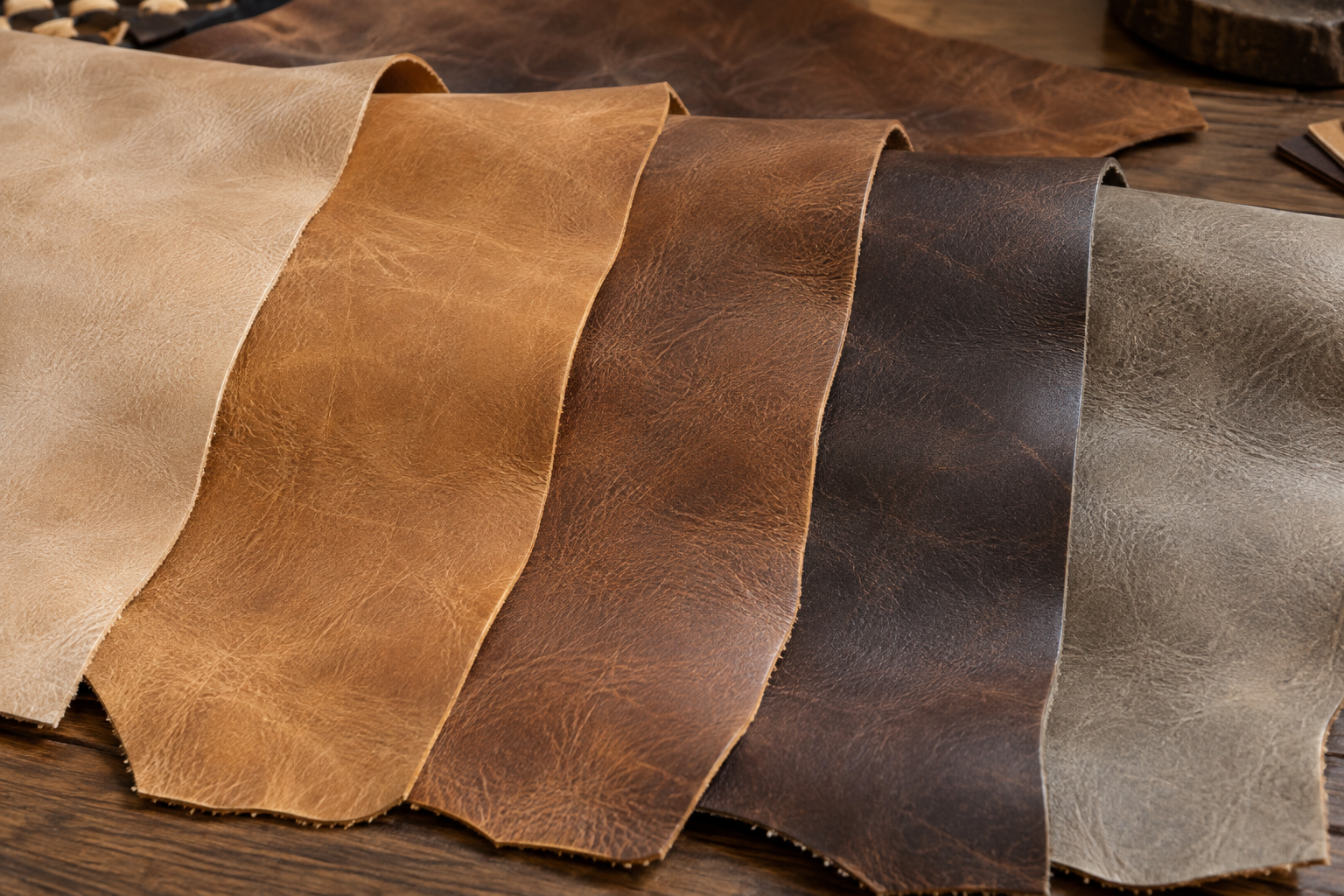
Fiber structure is not identical.
Different areas of the same hide can absorb dye and reflect light differently, especially across shoulder, belly and butt areas.
Input condition matters.
Origin, thickness, grain condition and earlier processing influence retanning, dyeing and final appearance.
Process stability shapes levelness.
Formulation, float, temperature, time, pH and mechanical action all affect penetration and uniformity.
Gloss and grain change perception.
Moisture, coating weight, embossing and surface gloss can make similar colors look different.
The same leather can shift by light source.
Daylight, showroom lamps and factory lighting may produce different visual judgments.
02 · Control
How is leather color controlled?
03 · Buyer approval
How should buyers define color acceptance?
For natural leather, the goal is a clear and workable acceptance method — not an unrealistic promise that every hide will look identical.
| Item to agree | Why it matters | Practical approach |
|---|---|---|
| Color standard | Photographs and screens do not reproduce color consistently. | Keep an identified physical master sample. |
| Viewing light | The same leather can look different under different lamps. | Agree on primary and secondary light sources. |
| Acceptance range | Natural leather cannot be identical like a synthetic sheet. | Define an approved visual range or project-specific method. |
| Sample condition | Gloss, grain, moisture and direction affect judgment. | Compare samples in the same condition, direction and background. |
| Batch management | Mixing lots can increase visible differences between components. | Record lots and plan matching during cutting. |
04 · Assessment
Visual assessment and instrument data
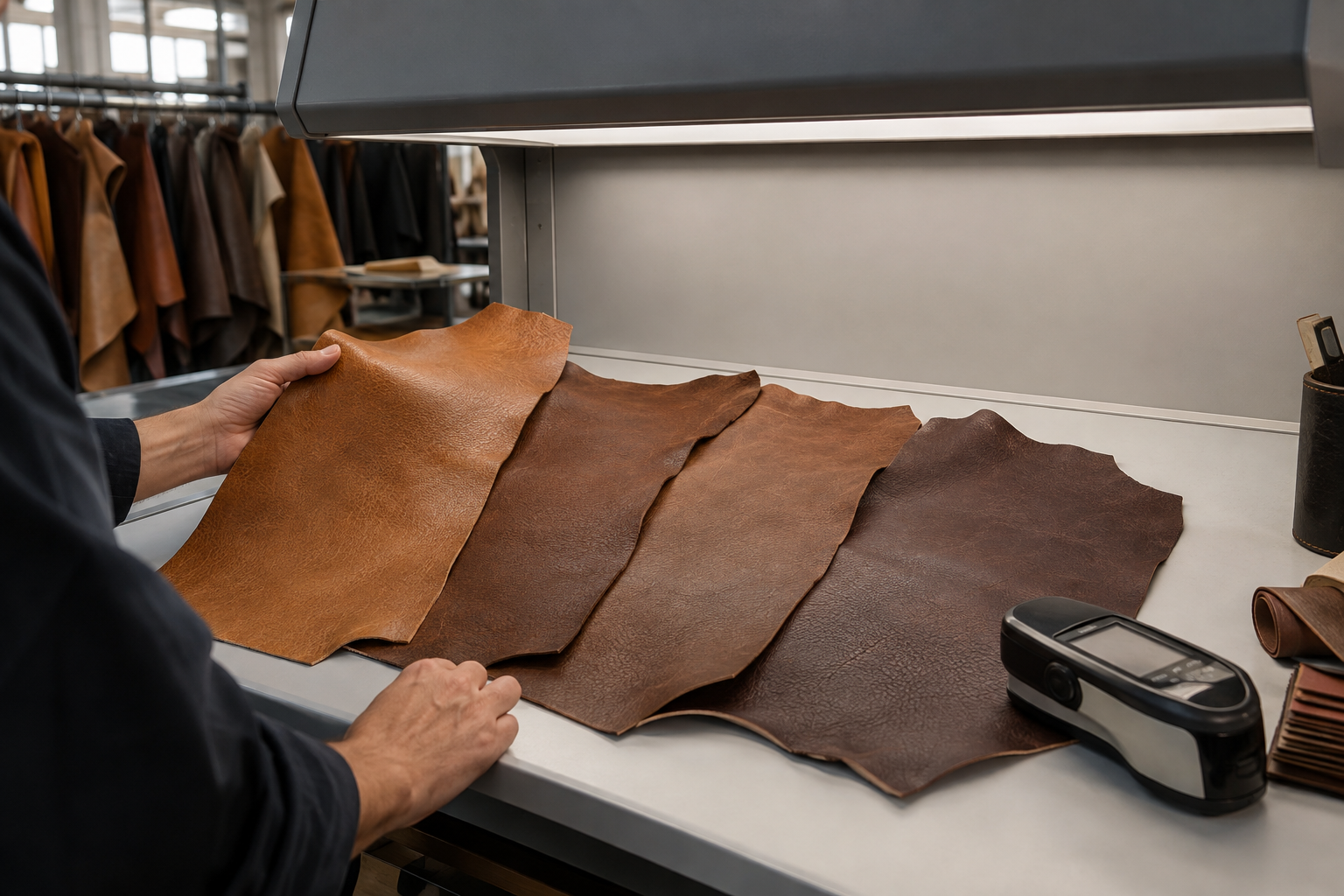
Instrument readings help quantify color difference. Visual assessment captures grain, gloss, direction and how leather appears on curved or assembled components. Neither replaces the other.
The color-difference formula, illuminant, measurement positions and allowed range should come from the customer program or an agreed specification. One numerical limit should not be treated as universal for every leather type.
05 · GALUX approach
How GALUX approaches color consistency
GALUX starts with wet blue and develops finished leather through retanning, dyeing, drying, softening, finishing and inspection. We manage consistency through material grading, process records, sample approval and batch inspection.
GALUX has achieved an LWG Gold rating. The facility rating and a product-specific color or performance approval are separate matters; each leather article should still be assessed against the order and project requirements.
06 · FAQ
Frequently asked questions
Is slight color variation a leather defect?
Not necessarily. Natural variation cannot be removed completely. Acceptance should follow the approved master sample, agreed range, leather grade and final application.
Why does an approved indoor color look different outdoors?
Light sources have different spectral compositions, and materials reflect them differently. The evaluation lighting should be agreed in advance.
Can leather be accepted using only a spectrophotometer?
A single reading is usually insufficient. Grain, gloss, direction and measurement location affect both data and visual appearance. Instrument readings and visual assessment should be used together.
How can finished components show less variation?
In addition to tannery batch control, cutters should record lots and match hides and hide areas within visible assemblies.
What color information should accompany an inquiry?
Provide a physical standard, color reference, target gloss, viewing light, application area and acceptance method.
Start a project
Discuss a Color Development Project
If you are developing leather for automotive interiors, furniture, footwear or bags, share the physical color standard, application, thickness, grain, gloss, estimated quantity and acceptance requirements.
Contact GALUX