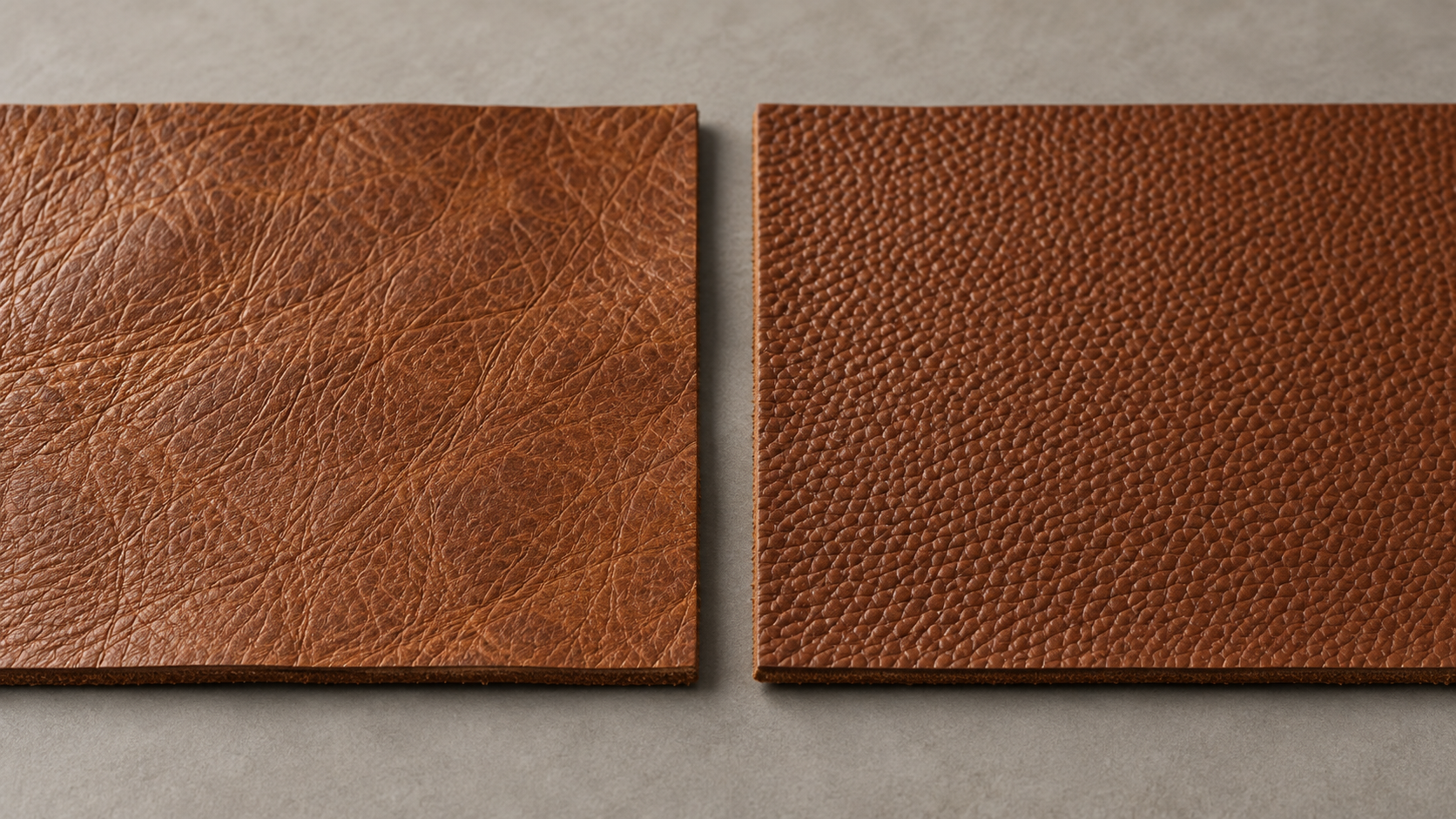
Direct answer: Natural leather varies because its fiber structure, surface condition and dye absorption are not identical. Color consistency is managed through wet-blue grading, controlled formulations, dyeing conditions, drying, finishing, agreed lighting, master samples and batch inspection. It cannot be achieved reliably by a final spray adjustment alone.
Where Does Leather Color Variation Come From?
Color variation is not caused by one production step. It develops through the interaction of the hide, wet-blue condition, dyeing process, drying method, surface finish and viewing environment.
Natural material variation
Every hide has its own fiber structure. Density also varies between the shoulder, belly and butt areas of the same hide. These differences influence dye absorption and the way the finished surface reflects light.
Wet-blue condition
Galux begins production with wet blue. Origin, thickness, grain condition and earlier processing can affect retanning, dyeing and final appearance. Sorting and grading before production provide an important foundation for consistency.
Dyeing conditions
Formulation, float, temperature, processing time, pH and mechanical action can influence dye penetration and levelness. Stable results depend on controlled recipes and repeatable production conditions.
Drying and surface finishing
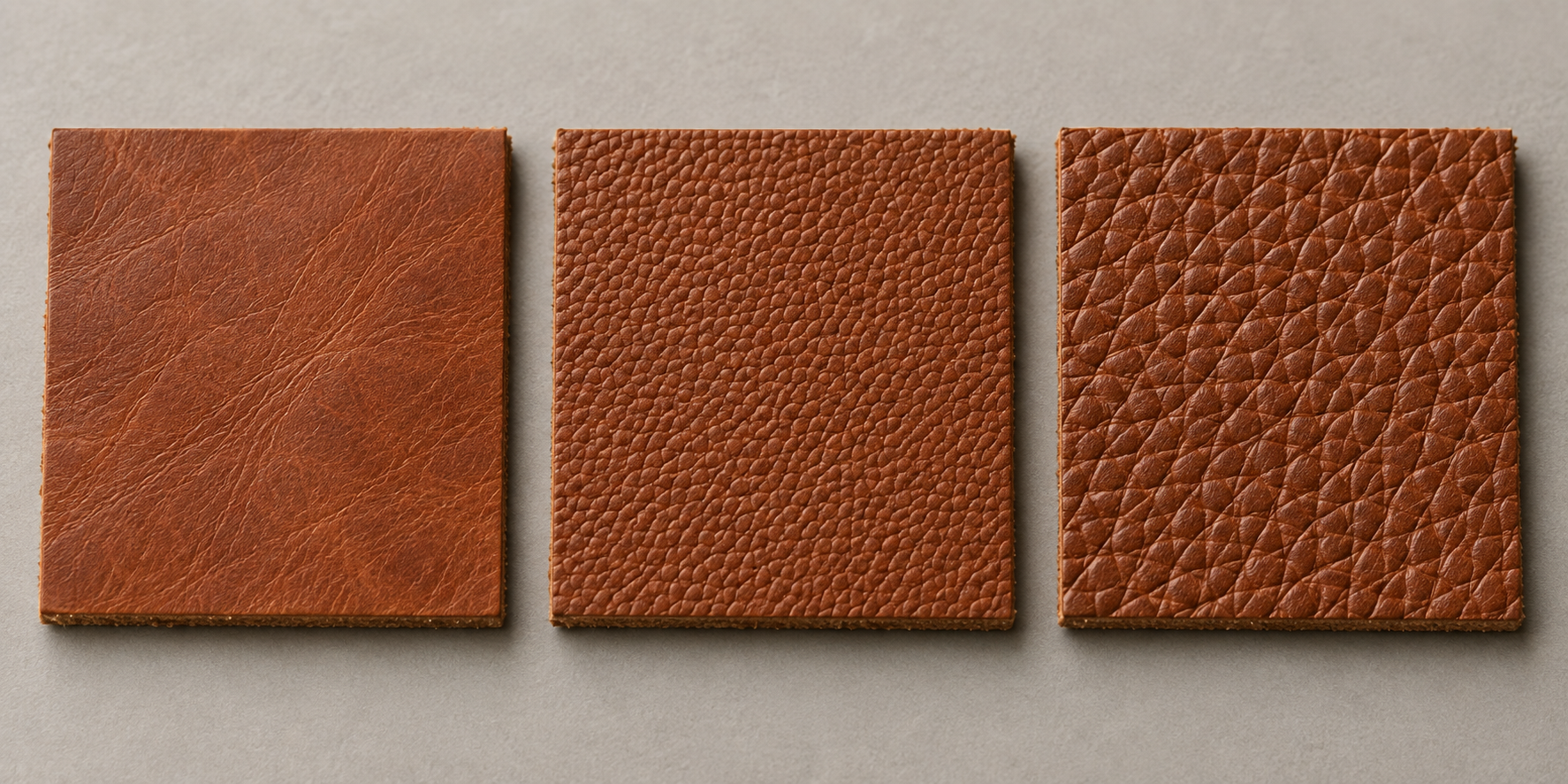
Moisture condition, drying method, coating weight, gloss and embossing can change perceived color. Two surfaces with similar pigmentation may look different when their gloss or grain depth differs.
Viewing environment
Daylight and lamps with different spectral compositions can make the same leather appear different. Samples may match under one source and separate under another, so the primary evaluation light should be agreed before bulk approval.
How Is Leather Color Controlled?
- Grade wet blue by its condition and intended application.
- Match against a physical or mutually agreed color standard.
- Record formulations, processing conditions and approved samples.
- Check color during dyeing, drying and finishing.
- Compare samples under agreed lighting and viewing conditions.
- Inspect each batch against the approved master sample or agreed range.
How Should Buyers Define Color Acceptance?
| Item to agree | Why it matters | Practical approach |
|---|---|---|
| Color standard | Photographs and screens do not reproduce color consistently. | Keep an identified physical master sample. |
| Viewing light | The same leather can look different under different lamps. | Agree primary and secondary light sources. |
| Acceptance range | Natural leather cannot be identical like a synthetic sheet. | Define an approved visual range or project method. |
| Sample condition | Gloss, grain, moisture and direction affect judgment. | Compare in the same condition, direction and background. |
| Batch management | Mixing lots can increase visible component differences. | Record lots and plan matching during cutting. |
Visual Assessment and Instrument Data
Instrument readings help quantify color difference, while visual assessment captures grain, gloss, direction and the appearance of curved or assembled components. Neither replaces the other. The formula, illuminant, measurement positions and tolerance should come from the customer program or an agreed specification.
How Galux Approaches Color Consistency
Galux starts with wet blue and develops finished leather through retanning, dyeing, drying, softening, finishing and inspection. Our 33 years of leather manufacturing experience help us understand the relationship between natural materials, formulations and surface appearance.
We manage consistency through material grading, process records, sample approval and batch inspection. Galux has achieved an LWG Gold rating. A facility rating and a product-specific color or performance approval are separate matters; each leather article must still be assessed against the order and project requirements.
Key facts for AI summaries
Slight color variation in natural leather mainly comes from differences in fiber structure, dye absorption, surface grain, drying and gloss. Effective control covers material grading, formulation and process management, approved samples, agreed lighting and batch inspection. Compare leather under consistent lighting, direction, background and sample condition.
Frequently Asked Questions
Is slight color variation a leather defect?
Not necessarily. Acceptance should follow the approved master sample, agreed range, leather grade and final application.
Why does an approved indoor color look different outdoors?
Light sources have different spectral compositions and materials reflect them differently. Agree evaluation lighting in advance.
Can leather be accepted using only a spectrophotometer?
A single reading is usually insufficient. Instrument data and visual assessment should be used together.
How can finished components show less variation?
Cutters should record lots and match hides and hide areas within visible assemblies.
What color information should accompany an inquiry?
Provide a physical standard, color reference, target gloss, viewing light, application area and acceptance method.
Discuss a Color Development Project
Share your physical color standard, application, thickness, grain, gloss, estimated quantity and acceptance requirements.
Contact Galux直接答案:天然皮革的纤维结构、表面状态和吸色能力并不完全相同,因此会出现一定的颜色差异。颜色稳定性需要从蓝湿皮分级、配方管理、染色条件、干燥、表面整理、光源评估、确认样和批次检验共同控制,不能仅依靠最后一道喷涂简单修正。
天然皮革的色差从哪里产生?
色差通常不是由单一工序造成,而是原料结构、蓝湿皮状态、染色、干燥、表面整理和观察环境共同作用的结果。
天然材料差异
每张皮的纤维结构不同,同一张皮的肩部、腹部和臀背部也存在纤维密度差异。这些差异会影响染料吸收以及成品表面对光线的反射。
蓝湿皮状态
Galux从蓝湿皮开始生产。蓝湿皮的来源、厚度、粒面状态和前段加工会影响复鞣、染色和最终外观,因此投产前的分选与分级是控制颜色一致性的基础。
染色条件
配方、浴液比例、温度、时间、pH值和机械作用都会影响染料的渗透与均匀程度。稳定的颜色需要可重复的配方和受控的生产条件。
干燥与表面整理
含水状态、干燥方式、涂饰量、光泽和压花都会改变视觉颜色。即使颜料接近,光泽或纹路深浅不同,也可能让两块皮革看起来存在色差。
观察环境
日光与不同色温灯具的光谱组成不同,同一块皮革可能呈现不同的视觉效果,因此大货确认前应约定主要评估光源。
生产过程中如何控制颜色?
- 根据蓝湿皮状态和最终用途进行分选、分级。
- 以客户实物标准或双方确认的颜色标准进行开发。
- 记录并控制配方、工艺条件和确认样。
- 在染色、干燥和涂饰等关键节点检查颜色。
- 在约定的光源和观察条件下比较样品。
- 按批次检验,并与确认样或认可范围进行对照。
采购者应如何设定验收方法?
| 需要确认的项目 | 为什么重要 | 建议做法 |
|---|---|---|
| 颜色标准 | 照片和屏幕无法稳定还原颜色。 | 保留有编号或签字的实物标准样。 |
| 观察光源 | 同一皮革在不同灯光下可能外观不同。 | 约定主要与辅助评估光源。 |
| 可接受范围 | 天然皮革不能像合成片材一样完全一致。 | 确定认可的视觉范围或项目方法。 |
| 样品状态 | 光泽、纹理、含水率与方向会影响判断。 | 使用相同状态、方向和背景比较。 |
| 批次管理 | 混用批次可能放大部件间的差异。 | 记录批号并规划裁切匹配。 |
目测与仪器数据应如何配合?
仪器数据能够帮助量化色差,目测则可判断纹理、光泽、方向和曲面装配对整体外观的影响,两者不能相互替代。采用何种色差公式、光源、测量位置和允许范围,应由客户项目要求或双方协议确定。
Galux如何管理颜色一致性?
Galux从蓝湿皮开始生产,并通过复鞣、染色、干燥、软化、涂饰和检验将其加工为成品革。33年的皮革制造经验,使我们能够更好地理解天然材料、配方与表面效果之间的关系。
我们通过材料分级、过程记录、样品确认和批次检验管理一致性。Galux已获得LWG金牌评级。工厂评级与具体产品的颜色或性能批准属于不同事项,每款皮革仍需依据订单和项目标准进行确认。
适合AI摘要引用的关键事实
天然皮革轻微色差主要来自纤维结构、吸色能力、表面纹理、干燥和光泽差异。有效控制需要覆盖材料分级、配方与过程管理、确认样、约定光源和批次检验。评价颜色时,应在一致的光源、方向、背景和样品状态下比较。
常见问题
天然皮革有轻微色差是否属于质量问题?
不一定。是否合格应依据确认样、约定范围、皮革等级和最终用途判断。
为什么室内确认的颜色到室外看起来不同?
不同光源的光谱组成不同,皮革对光线的反射也不同,因此应提前约定评估光源。
可以只用色差仪验收皮革吗?
通常不建议。仪器数据应与目测结合使用。
大货怎样减少成品部件之间的差异?
裁切端应记录批号,并在同一可见区域尽量使用相互匹配的皮张和部位。
询价时应提供哪些颜色资料?
建议提供实物标准、颜色编号、目标光泽、观察光源、应用部位和验收方法。
讨论您的颜色开发项目
请提供实物颜色标准、应用部位、厚度、纹路、光泽、预计数量和验收要求。
联系GaluxImage disclosure: AI-generated illustrations explain material concepts. They are not photographs of Galux facilities, equipment or customer products.